Material Handling / Morello / Rail System
Morello · Rail system
Morello rail transfer carts and powered rail carts
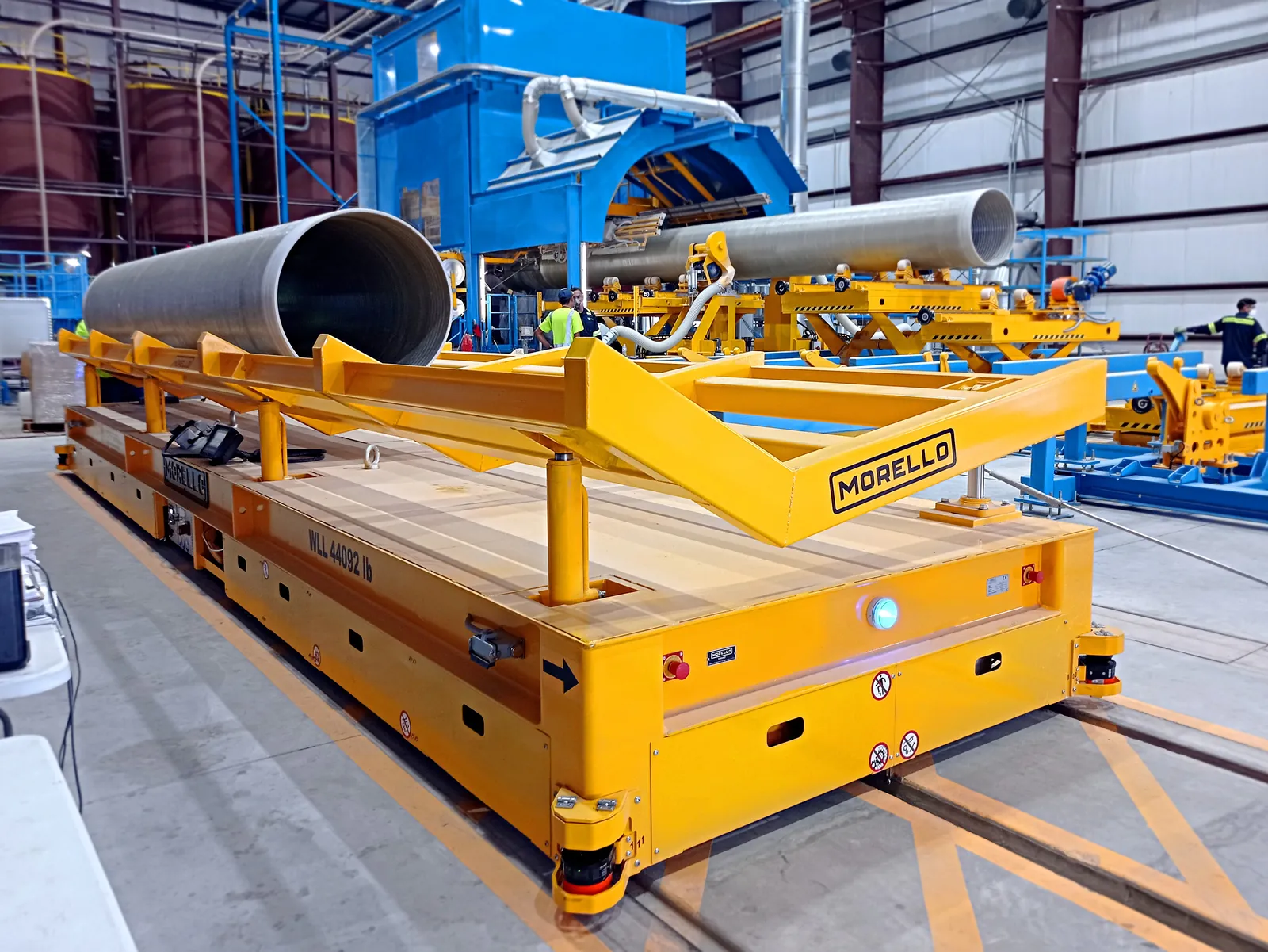
Powered rail-guided transfer carts for fixed, repeatable routes between bays, buildings and yards. Electric rail carts on battery or grid power, operator-controlled or fully automatic, from 1 t to 1,000 t (2,205,000 lb).
Key features
Why choose a rail system
Very high capacity
Steel wheels on steel rails keep rolling friction low, so carts reach 1,000 t (2,205,000 lb).
Lower cost per ton
No steering system and less drive power than a wheeled transporter of the same size.
Four power options
Battery, plant grid via cable drum, busbar or cable chain, diesel generator, or the plant's pneumatic system.
Operator or automatic
Pendant, radio remote, footplate or pulpit control, or a fully automatic RGV linked to your PLC, WMS or ERP.
Built for the process
Lifting decks, tilting tables, load cells and heat-resistant decks are engineered to the load.
Safety as standard
Laser scanners, sensitive bumpers and ultrasonic sensors. Ex-rated versions to ATEX, IECEx and NEC 500.
Configurations
Rail cart configurations
Operator-controlled carts
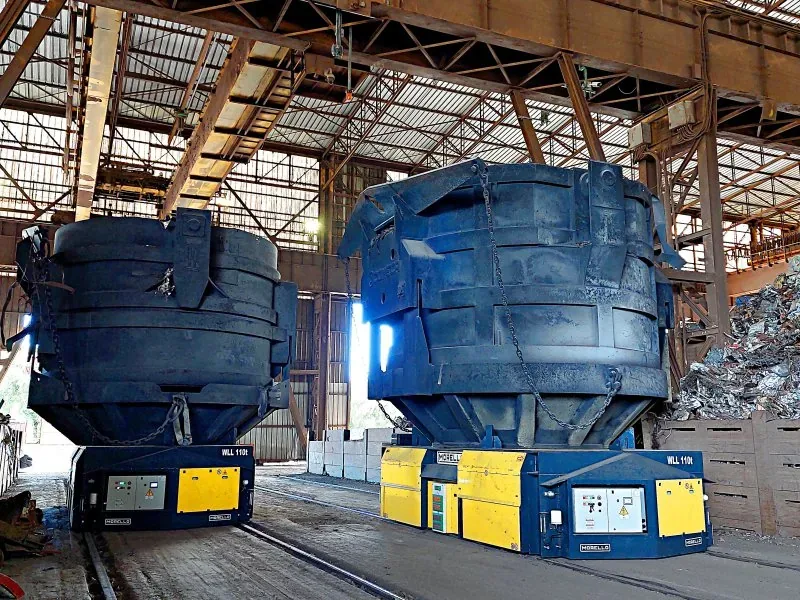
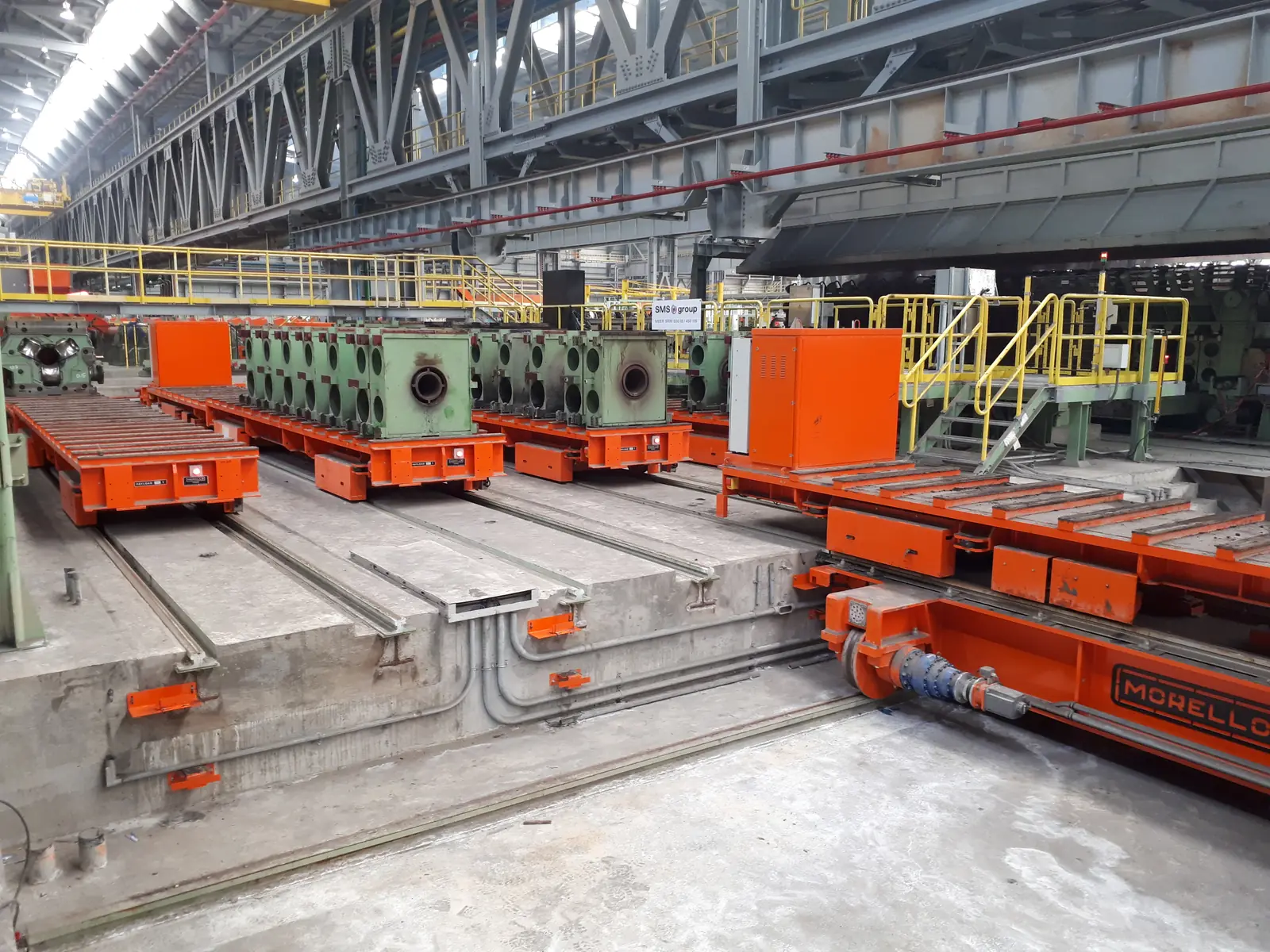
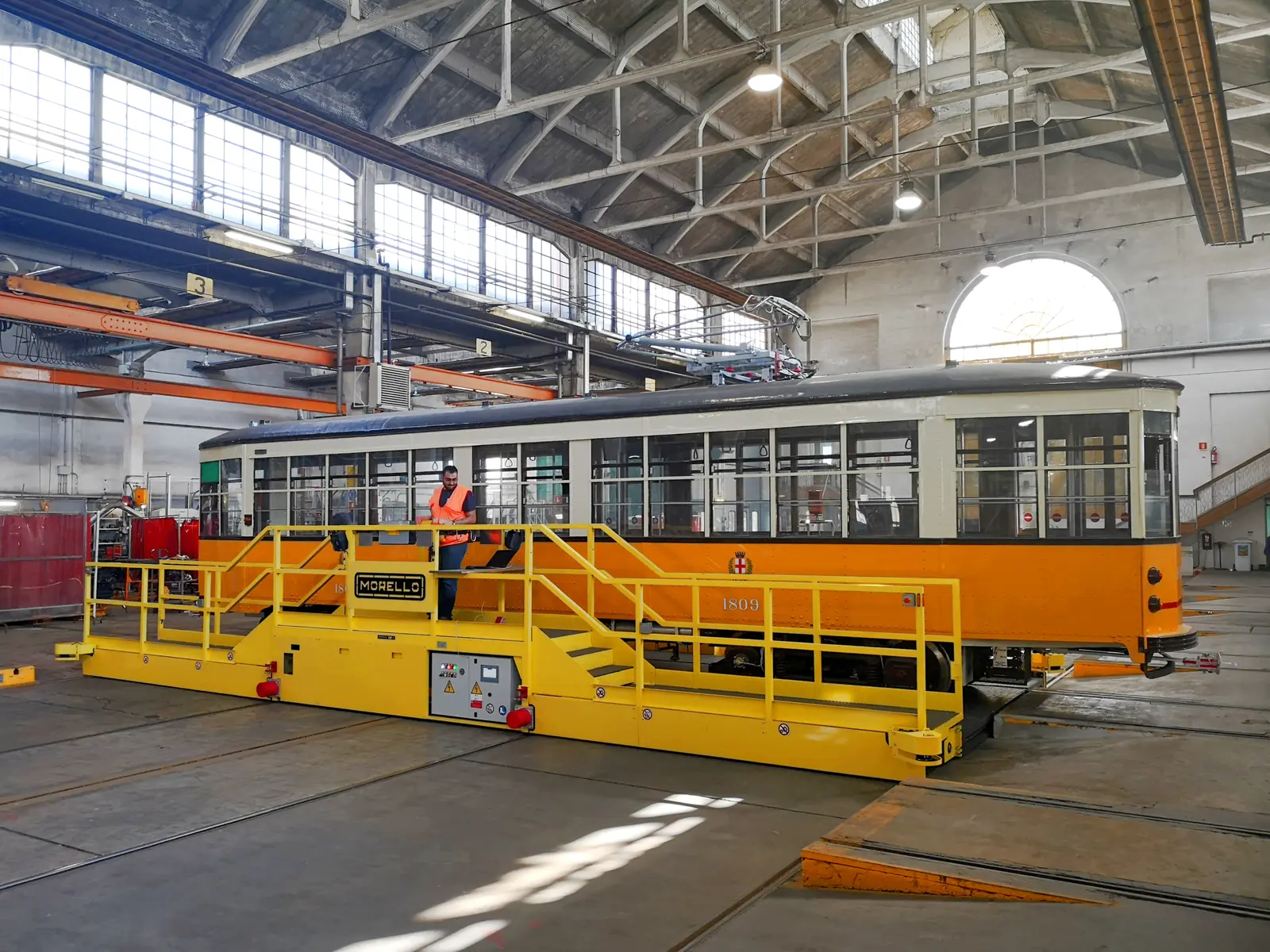
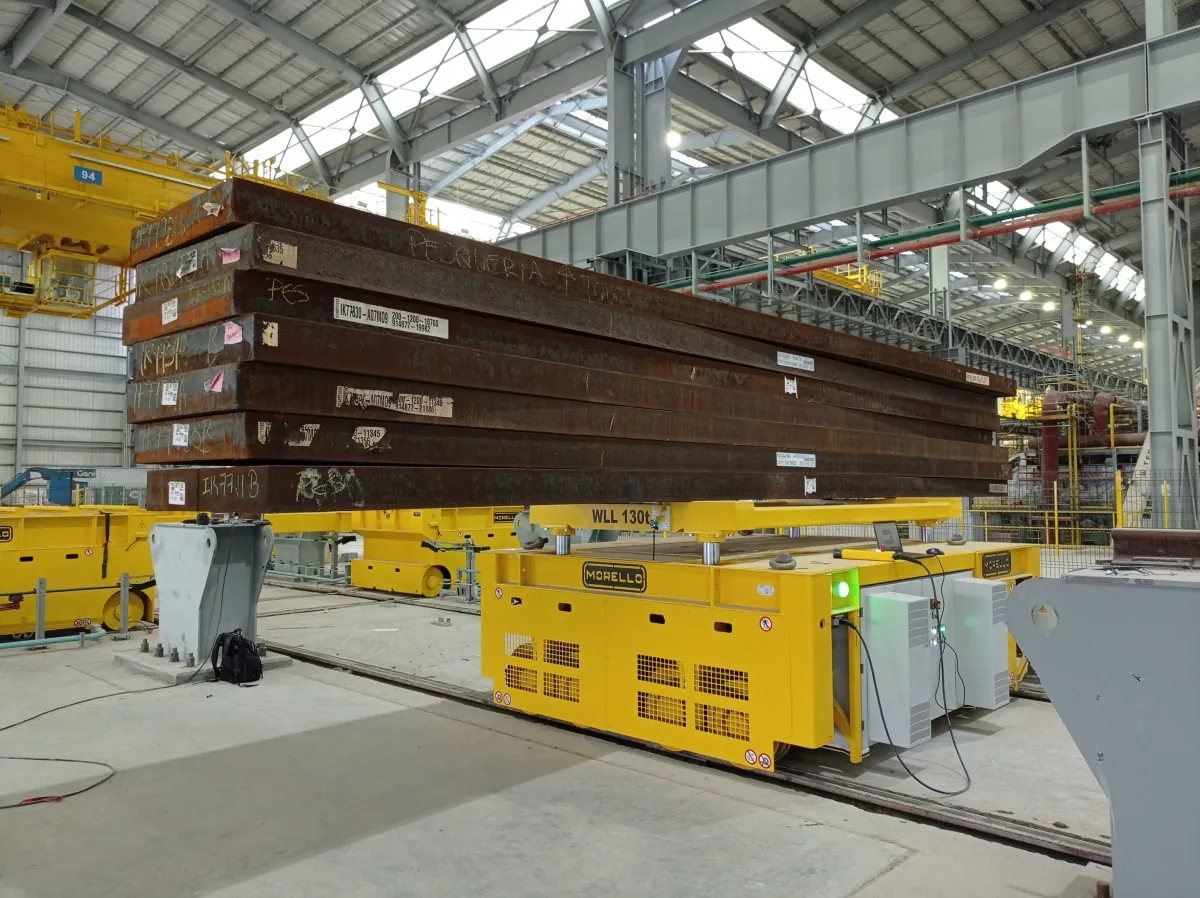
Battery or grid-powered carts run from a pendant panel, radio remote, footplate or pulpit. Common for scrap buckets, coils and bay-to-bay transfers.
More info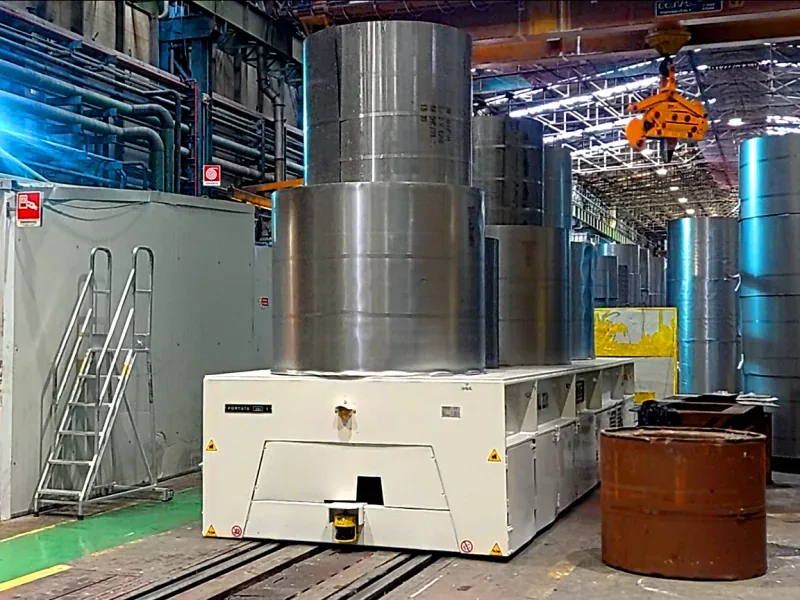
Automatic transfer carts (RGV)
Driverless rail carts integrated with plant automation on Siemens, Allen-Bradley, Omron and other PLCs, from simple on-board panels to full WMS/ERP links.
More info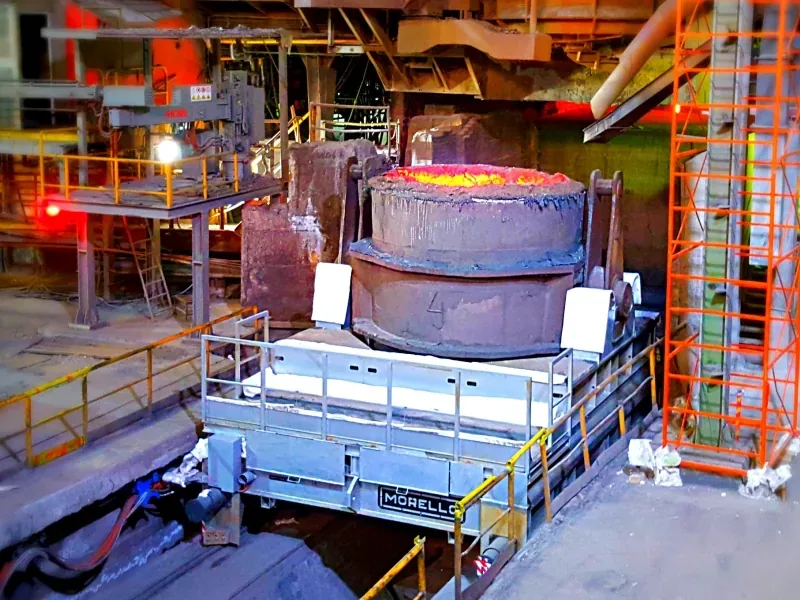
Ladle transfer cars
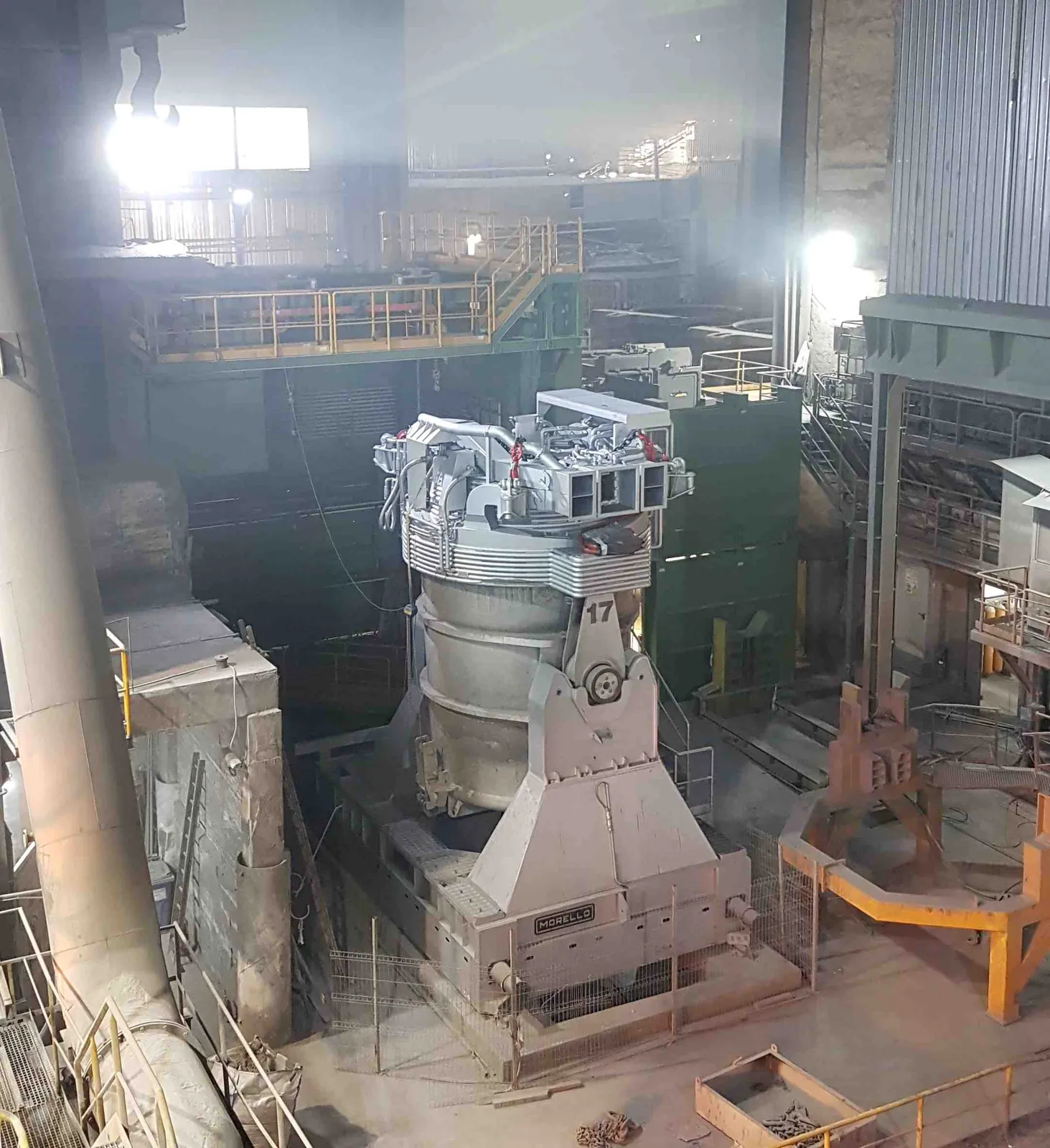
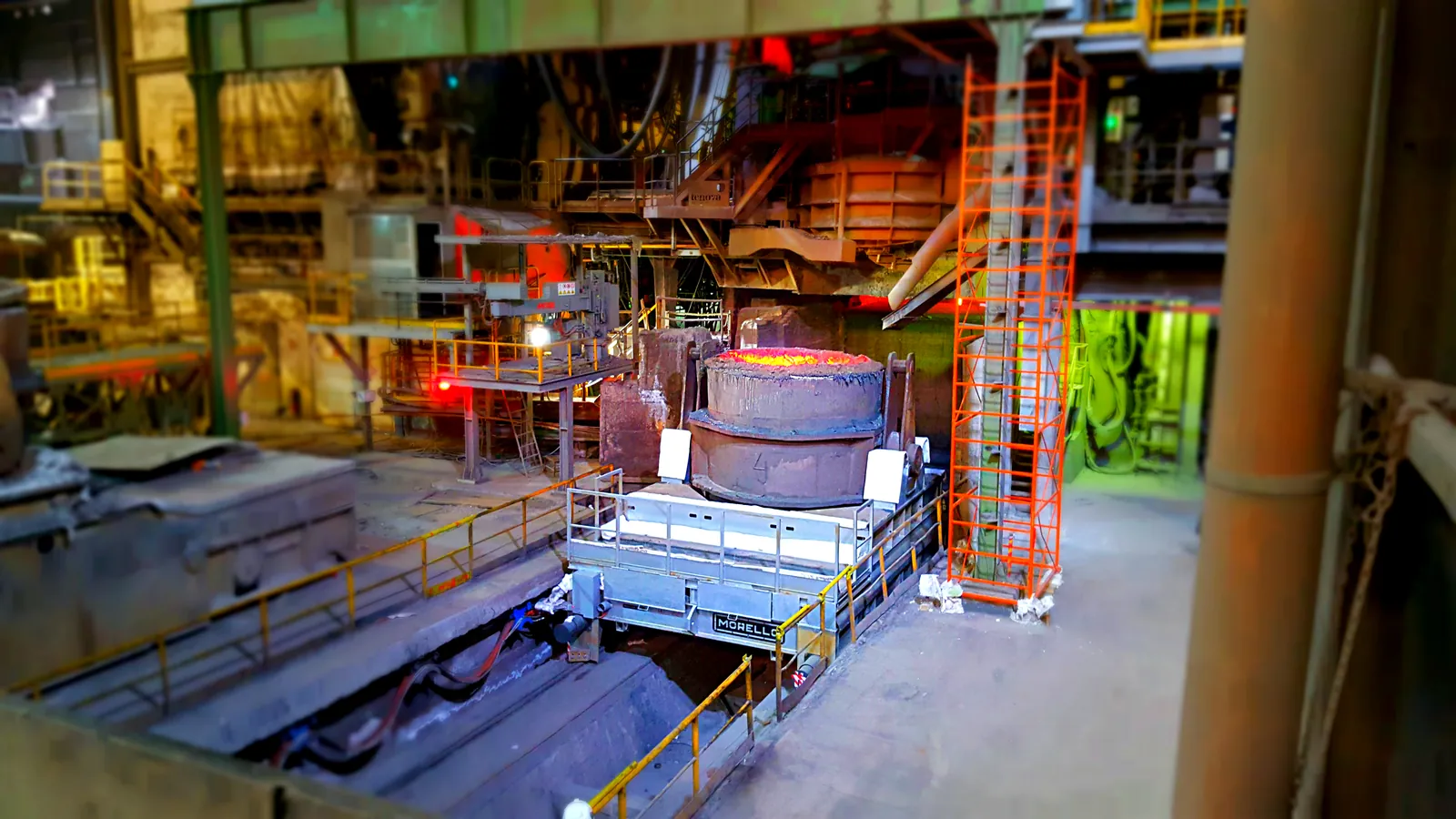
Rail cars for ladles and hot metal in steel mills and foundries, with options such as on-board load cells for weighing.
More info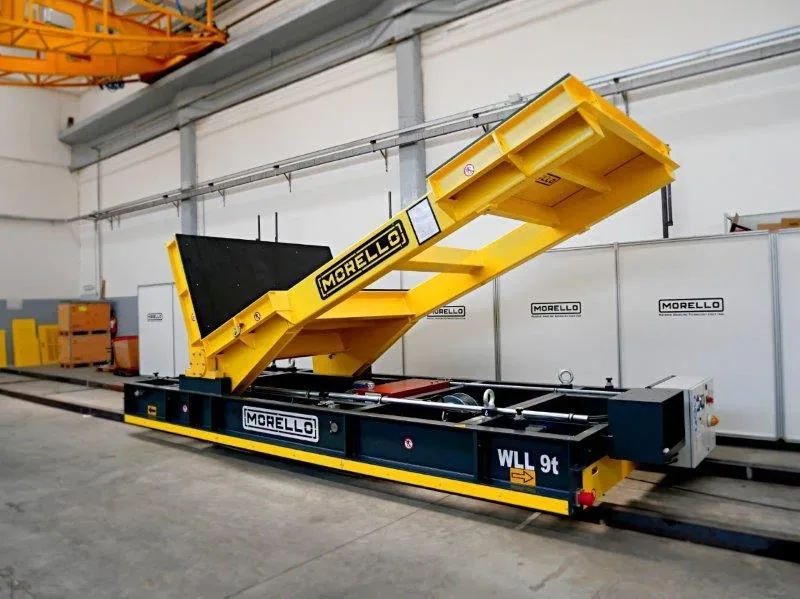
Special decks
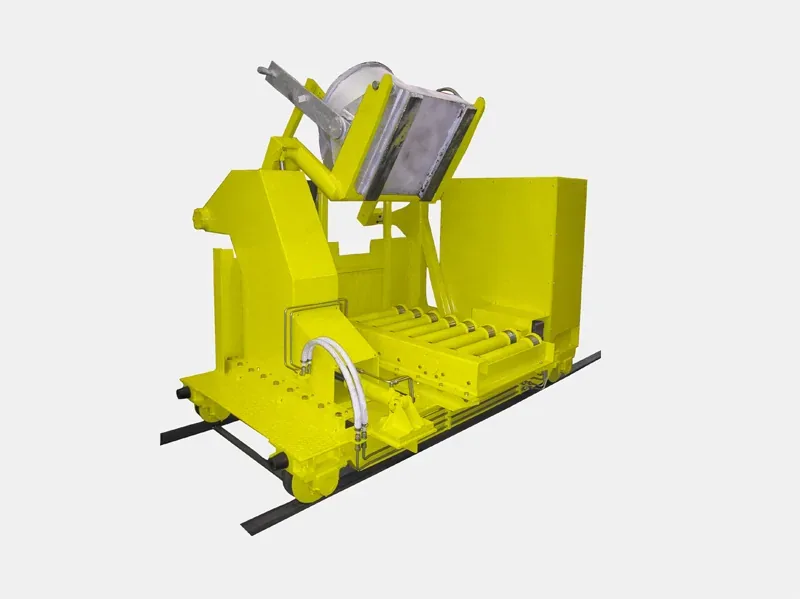
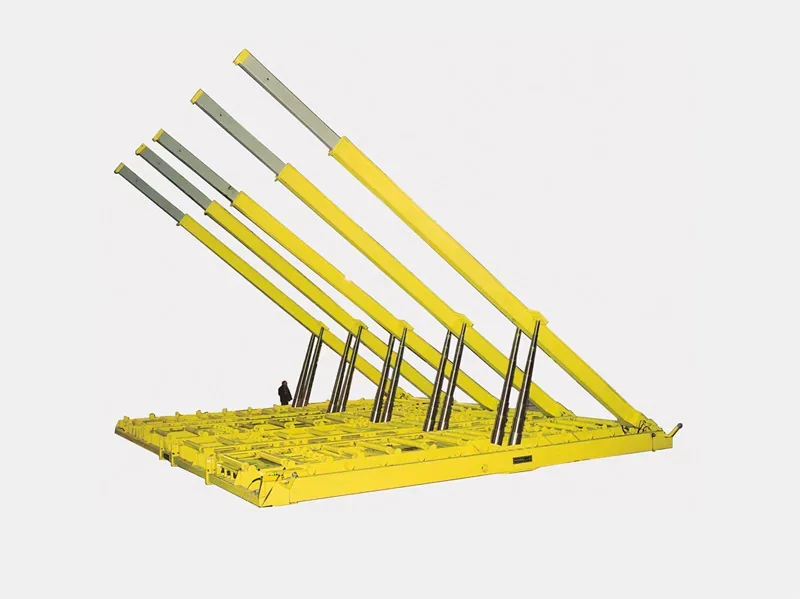
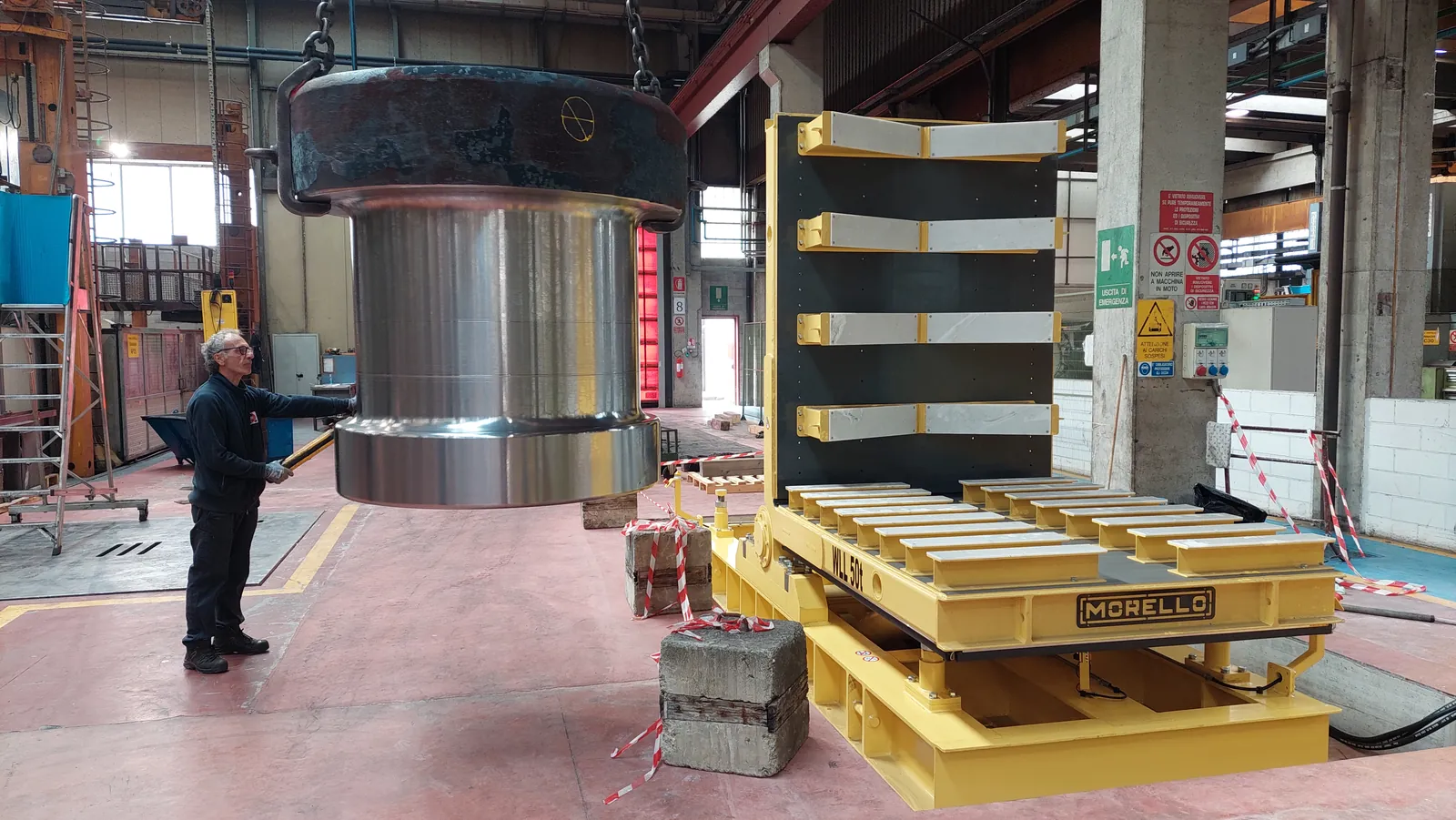
Tilting, rotating and lifting decks for naval panels, nuclear components and other loads that must be repositioned on arrival.
More info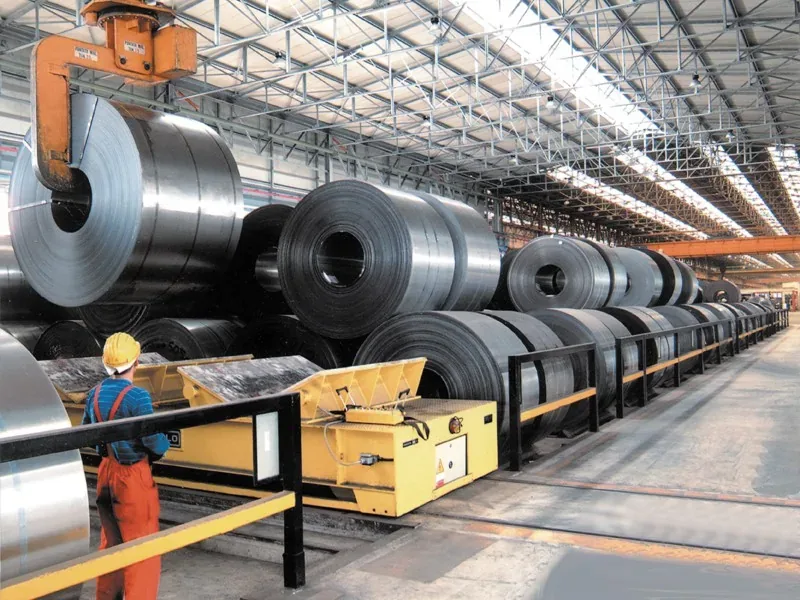
How it works
How a Morello rail transfer cart works
A rail transfer cart runs on steel wheels along steel rails. Friction between steel surfaces is very low, so the cart carries very high loads with less power. With no steering system, it costs less than a battery or diesel transporter of the same size and capacity. Morello's SB range comes as SBR (operator-controlled) and SBA (automatic) models with 4 or 8 wheels (4R, 8R), from 1 t to 1,000 t and more on request.
Morello builds operator-controlled carts and automatic transfer carts (RGV) that interface with plant software. Typical jobs are linking bays, connecting production to storage yards and taking load off overhead cranes. When the route may change, a wheeled cart such as SGAI or OMNI is the better fit, and any wheeled Morello cart can be upgraded to an AGV.
Specifications
Rail transfer cart technical characteristics
Capacity
1 t to 1,000 t (2,205 lb to 2,205,000 lb)
Power supply
Battery, plant grid (cable drum, busbar, cable chain), diesel generator, pneumatic
Travel speed
0–3 km/h (up to 1.9 mph) standard, faster on request
Drive motors
AC, hydraulic or pneumatic motors
Controls (operator)
Pendant panel, radio remote, footplate, pulpit
Controls (automatic)
On-board touch panel, notebook, pulpit, customer WMS/ERP
Wheels
Steel wheels for any type of rail
Lifting deck
On request, stroke from 50 mm (2 in)
Safety devices
Laser scanners, sensitive bumpers, ultrasonic sensors
Environment
Indoor, outdoor, offshore
Options
Automatic RGV version, Industry 4.0, ATEX / IECEx / NEC 500
Applications
Where rail carts work
Steel mills
Move coils, slabs, billets, scrap buckets and ladles between bays and departments.
Foundries
Transfer castings, molds and ladles on fixed, repeatable routes.
Shipyards
Carry and tilt naval panels between fabrication and assembly halls.
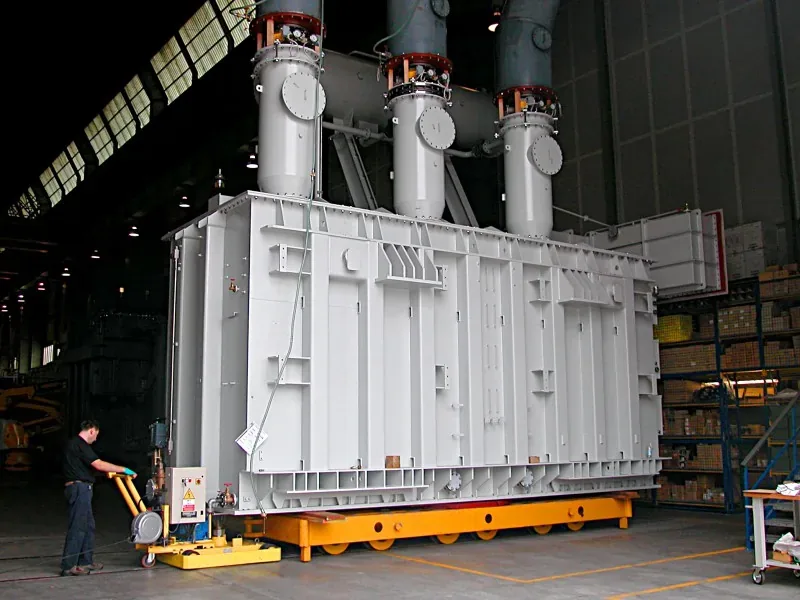
Power transformers
Move transformers on rails through assembly, testing and shipping.
Nuclear and railway
Rail carts with tilting or rotating decks for components and rolling stock.
Plant logistics
Link production buildings to outdoor storage yards and cut overhead crane load.
Gallery
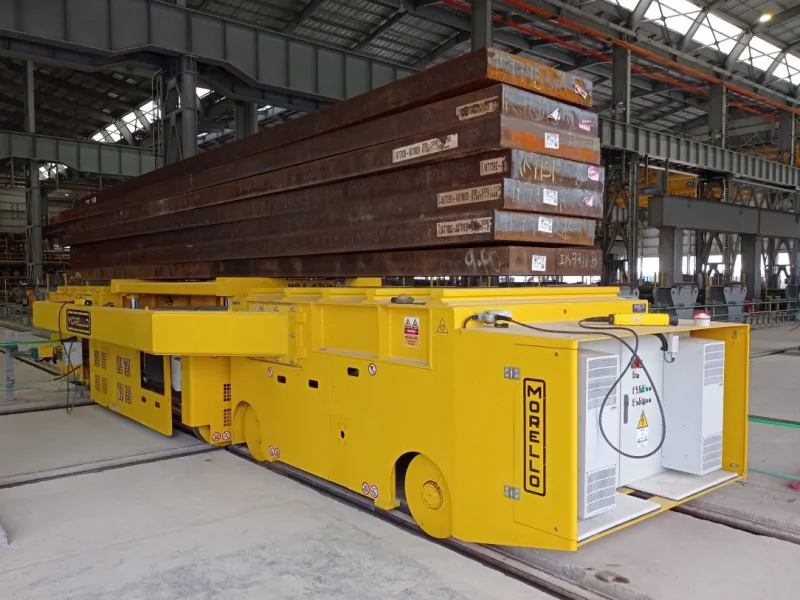
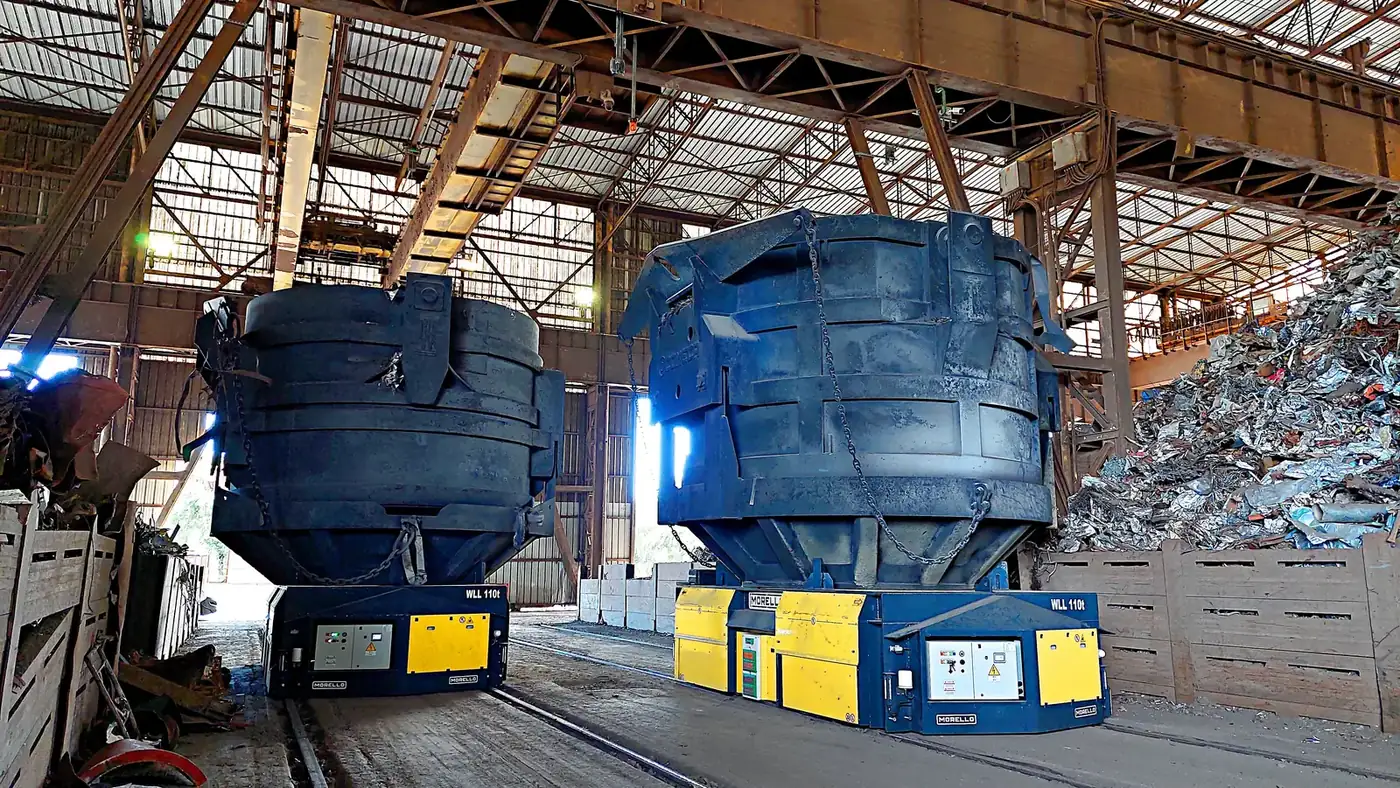
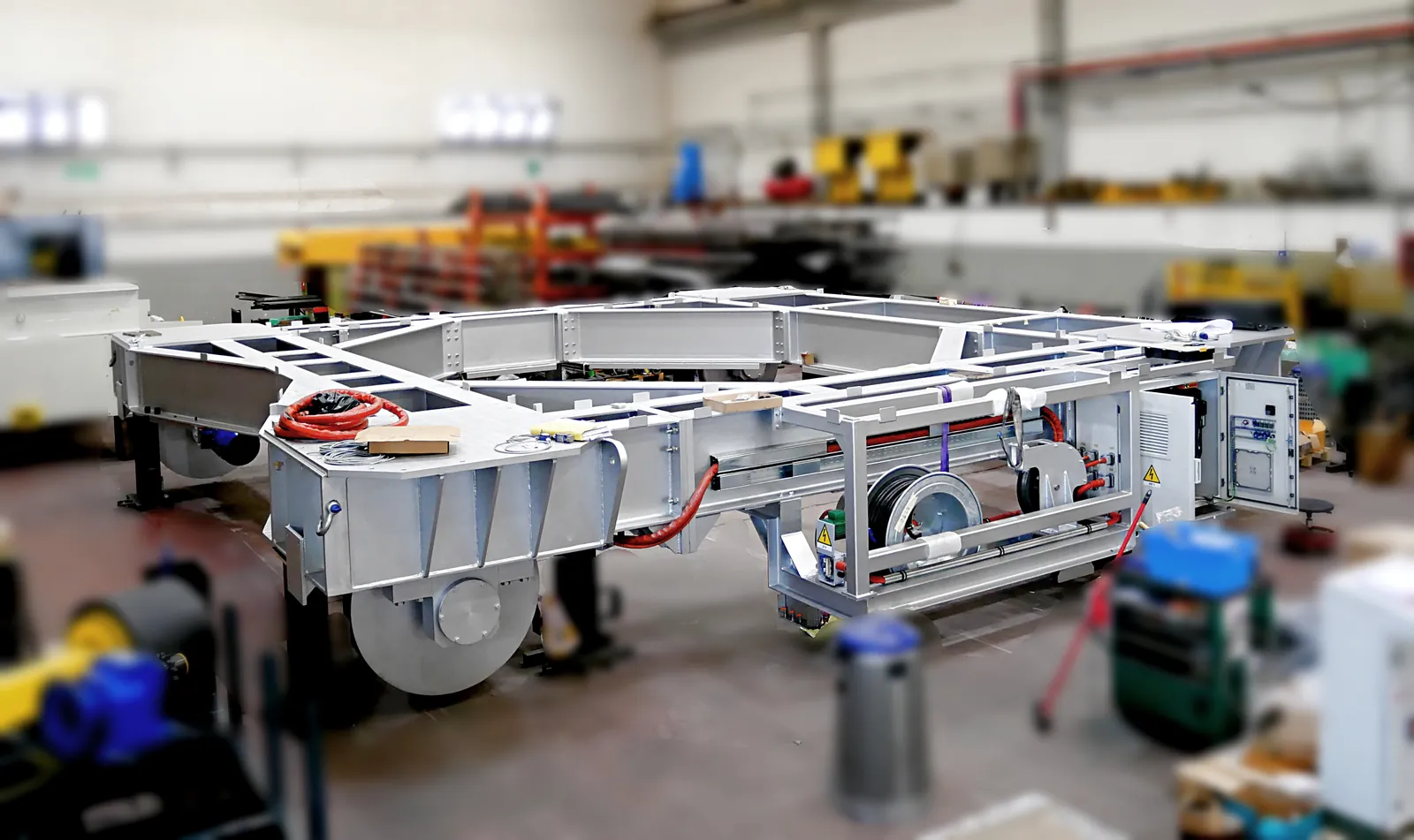
Rail System in the field
Rail System: frequently asked questions
When is a rail transfer cart better than a wheeled cart?
A rail cart is the better choice when the route is fixed, the cycle repeats and the load is very heavy. Steel wheels on rails need no steering and less power, so cost per ton is lower. If the route may change or rails are not practical, a wheeled SGAI or OMNI cart fits better.
How are Morello rail carts powered?
Morello offers battery power, plant grid power through cable drums, busbars or cable chains, diesel generators and pneumatic drives from the plant's air system. The choice depends on route length, duty cycle and layout. Prella reviews your plant and recommends the right supply.
Can a rail transfer cart run automatically?
Yes. Morello builds automatic transfer carts (RGV), from basic carts controlled by a panel on board to systems fully integrated with your PLC, WMS or ERP. Morello's software engineers work with the main PLC brands, including Siemens, Allen-Bradley, Rockwell, IFM and Omron.
How much can a Morello rail cart carry?
Morello rail transfer carts are built from 1 t up to 1,000 t (2,205,000 lb). Examples include 110 t scrap bucket carts, 190 t ladle cars with load cells and 220 t automatic coil carts. Deck size, speed and power supply are engineered to your load and route.
Planning a rail transfer system?
Send Prella the load, rail span, route length and duty cycle. We quote, deliver, start up and service Morello rail carts across North America.